
Voice is that hard-to-define, easy-to-recognize element that contributes to creative nonfiction’s wide-ranging appeal with readers. Memoirists and personal essay writers in particular are tasked with providing readers with the sense that the written words convey a genuine personality—that a real person speaks the message. They have to get the person on the page.
When we choose to write about difficult subjects—painful past experiences, traumas, family secrets—the task can be complicated. Our first impulse may be to invent a flawless self in our writing. To present ourselves as strong, good, successful, admirable, unscathed by life. We may resist the thought of revealing our woundedness, our vulnerability, our imperfections to our readers. Yet, when we write about difficult subjects, those are exactly the qualities to which readers will respond and relate. How can we overcome our impulse to put our best selves forward in writing and deliver what will be read as a captivating voice on the page?
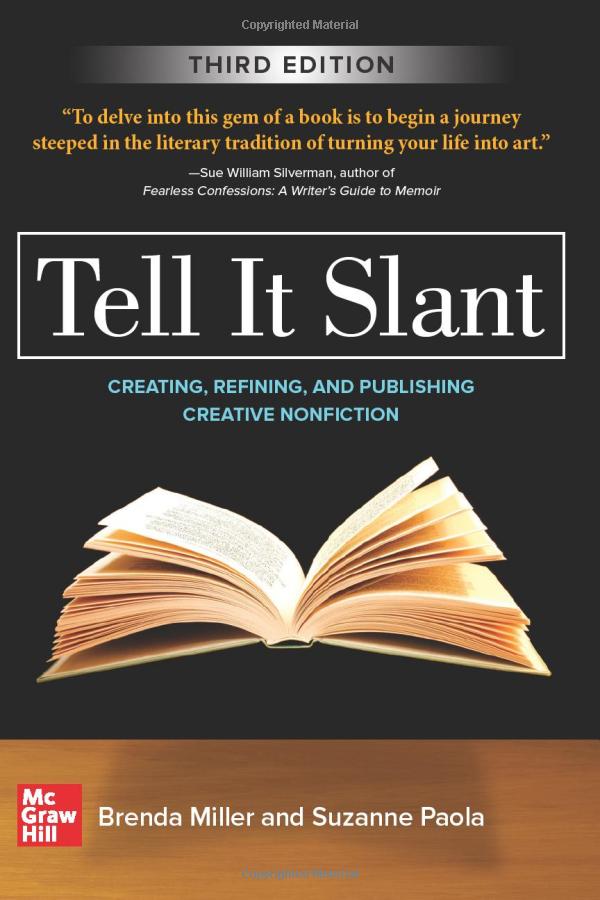
One method that writers have used is what Brenda Miller and Suzanne Paola, in their book Tell It Slant, have playfully dubbed the “hermit crab” essay form. Named after the resourceful crustacean that overcomes the vulnerability of its soft abdominal exoskeleton by inhabiting the empty shells of departed mollusks, this type of essay consists of a writer’s appropriation of a familiar, non-essay form in order to convey a sensitive message about the self.
As the hermit crab makes a home for itself, and a wall of protection, by adopting an existing, though foreign, shell, so writers of “hermit crab” essays appropriate familiar, textual forms in order to cultivate their voice. They craft their text in the guise of a recipe, a job description, a to-do list, an index, questionnaire, or numerous other familiar forms that serve as a framework, or more pertinently as a protective shell, for their personal message.
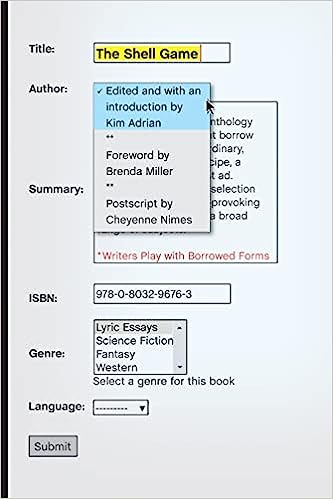
Two excellent examples of hermit crab essays that my students have enjoyed reading and using as models for their own work are Dinty Moore’s “Son of Mr. Green Jeans” and Brenda Miller’s essay “We Regret to Inform You.” Moore presents a reflection on his troubled relationship with fatherhood in the form of an alphabetical index of terms. Miller frames a number of life’s disappointments as a series of rejection letters. Both of these essays are included in an anthology edited by Kim Adrian titled The Shell Game: Writers Play with Borrowed Forms.
How does employing a borrowed form to approach a writer’s difficult experiences serve to get the person on the page? By providing the writer with a few advantages.
- Distance
By framing their messages in non-traditional forms such as a letter or index, writers fictionalize their personal stories, creating a distance between themselves and their subject that allows them to examine their own experiences seemingly from the outside looking in. They achieve a degree of objectivity. - Freedom
Borrowing a non-traditional-essay form frees writers from the obligation to present their message in conventional ways. They are exempted from the expectations that their story will be told chronologically, that their message will be free of contradictions, paradoxes, and neat conclusions. They are free to approach their subject in innovative ways. - Camouflage
Since the appropriated form fictionalizes the message, the writer may use this seemingly made-up forum to open up and get real. The form provides a disguise behind which the writer can dare to be vulnerable, imperfect, honest.
From within the shell of the hermit crab essay, a vibrant voice can emanate. The key is in both concealment and revelation. The writer can establish emotional distance from the subject while presenting the self up close to the reader.
Challenging to write? Yes. Worth the effort? Definitely.


 Person on the Page
Leave a comment