

My thanks to Bear River Review, in which an earlier version of this essay was published.
How to Restore an Abandoned Garden at a House You Bought in Ypsi
First: Realize that you have moved into someone else’s house. Wander through the leavings of another person’s life.
When you are a firmly established mid-lifer, get divorced. Be so disoriented by your abrupt life change that you feel you must flee. Move away from your lifelong home on the East Coast to Michigan, and settle in Ypsilanti.
Purchase a house as-is, with its rotting back door, crumbling chimney, decrepit carriage house out back, and the clutter of belongings the former owner left behind. Mismatched furniture and broken kitchen appliances. Boxes full of old photographs from a man’s life—girlfriends maybe, friends on hiking trips, Christmases, a wedding, a golden lab with a face that seemed to smile. Filing cabinets stuffed with documents—faculty contracts from Eastern Michigan University, cards from friends, teaching awards, letters from a lawyer regarding a bankruptcy, divorce papers. Learn from these that his name was Michael.
And in the carriage house, a brass bed, a stack of worn tires, garbage bags full of old clothes, and gardening tools. During the first few months that you occupy the house, rummage through Michael’s things. Chipped coffee mugs, one with “World’s Best Teacher” painted in gold. An old note stuffed in a kitchen drawer with a message scrawled in pencil: I’m sorry, I’m sorry. Please forgive me. Love, M. Keep some of the furniture. Keep the gardening tools.
Second: Tear out the many accumulated seasons of dead wild grape vines that have woven themselves into the chain link of the garden fence. (This will take several days longer than you think it will.)
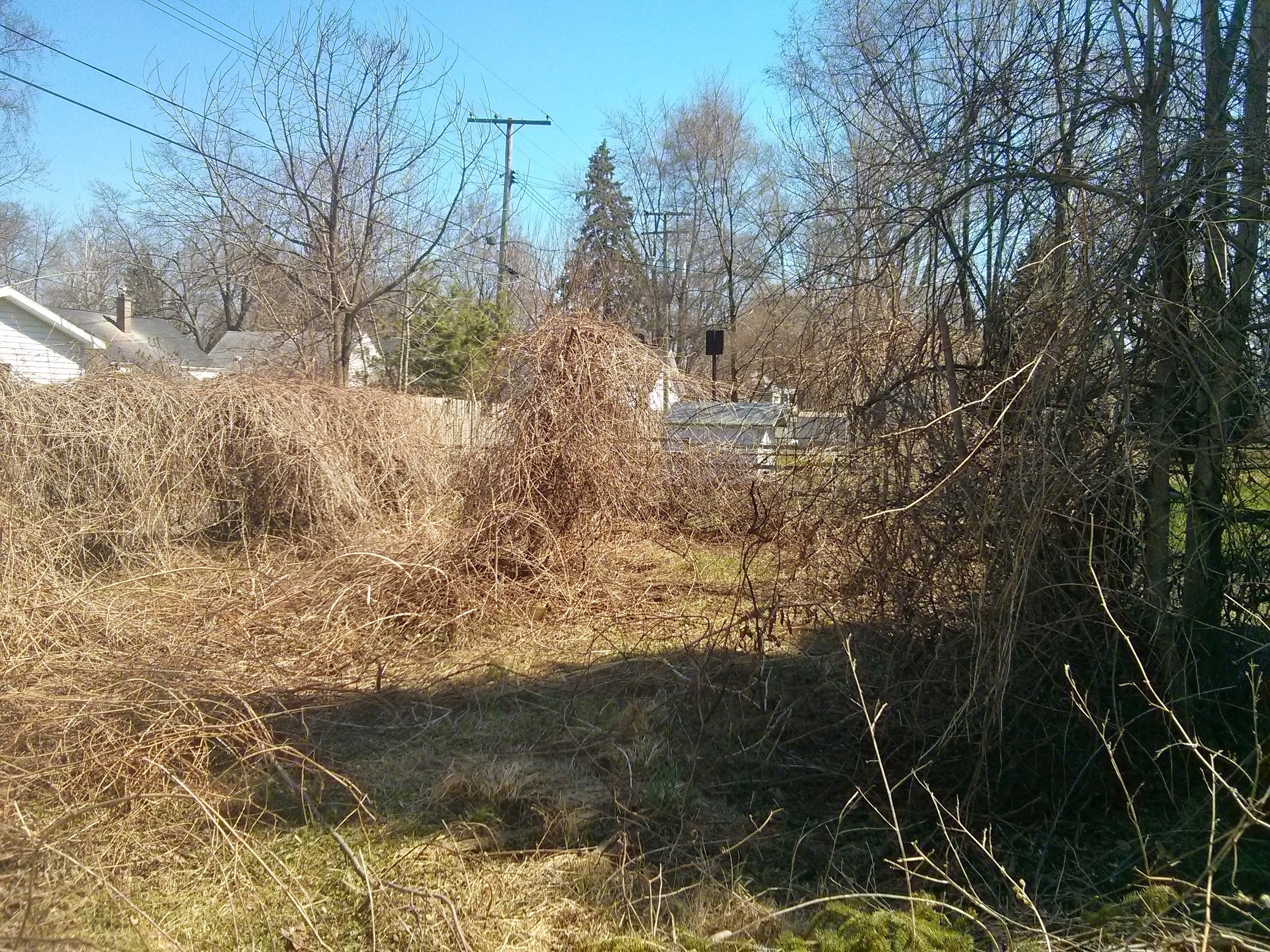
At the end of the backyard next to the alley, one of the former owners of the house—Michael, or someone before him—fenced off a large plot for a garden. Left untended for years, it is overgrown with vines, weeds six feet high, and sapling trees. Someone—maybe some of the people who use the alley as a shortcut between two of the town’s main streets—have thrown trash over the fence. Neighbors advise you to hire someone to clear out the scruff, brush, weeds, vines, and trash that make the ground invisible. Don’t try to do that yourself, they say. It’s too much for you. There could be snakes in there, they say. There could be rats.
After struggling for over an hour to start the old mower that Michael left in the carriage house and cutting the backyard’s scraggly grass, open the gate and step into the garden. Stand there in a wildness that warns against trespass. Grown too high and thick to walk through, the chaos seems unconquerable. Reach with both hands into the dense tangle of dried, splintered wild grape vines woven into the chain link. Pull. The old vines snap dryly as you feel their hollowness, their surrender. As you work, they cast a fine dust into the air. Barehanded and single-minded, tear at the mess of the garden’s past. Break the vines and crush them under your feet. Work until your hands are numb and your shoulders ache.
Third: Feel lost late at night when you realize you are in an old house far from home.
Sometimes at night, wonder how you ended up here, alone in an old house. There in the dark, try to piece together a story of how this could have happened. Go over the details as if you were memorizing a list of vital facts. Tell yourself the story over and over. Learn, finally, how to sleep there. Decide that feeling lost is not the worst thing that can happen. Decide that there are worse things than being alone.
Next: Accept help.
You are dropping logs and rotting boards that someone left in the back corner of the garden area over the fence when a Jeep making its way down the alley slows. It stops. The driver opens his window, looks at the piles of weeds and stacks of vines you have accumulated, enough to fill a hundred or more yard waste bags, and says, “What the hell do you think you are trying to do?”
Meet this man, a neighbor with a hardware store’s worth of tools and equipment in his Jeep. “Did you do all that yourself?” he asks, as if it were impossible. Tell him about a dream you have of a garden where, if the gardener devotes enough effort, the juiciest tomatoes and the biggest cabbages in all of Michigan might grow.
Your neighbor has a sledgehammer that he calls Big Mo. It is just the thing for knocking the tree stumps in the garden from their roots to get them out. He encourages you to use it yourself to loosen the stumps, because someone like you, he says, will have to be able to take care of herself. “Take this hammer and swing it,” he says. “ ‘Atta girl!” From Big Mo, learn that gardening is good therapy.

Later: Be surprised at how beautiful, black, fine, and rich is the soil of this, your garden.
Learn that starter fluid will allow you to get Michael’s old left-behind rototiller running. Work the soil until it is ready for planting, even though the tiller knocks you down sometimes, even though you are stiff after working so hard.
Then: Work hard.
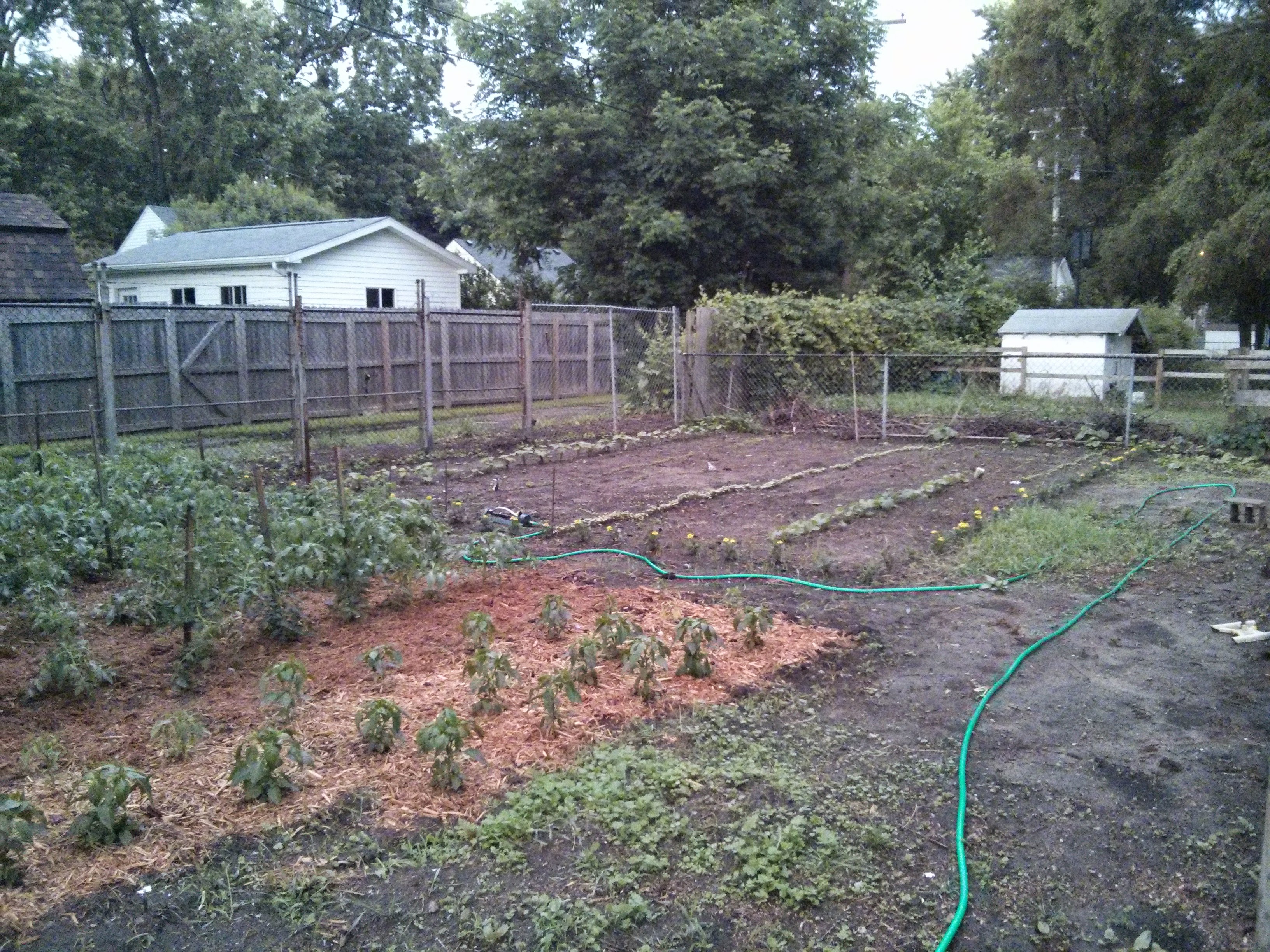
Plant tomatoes, peppers, beets, cabbages, beans and, even though you are warned not to, zucchini. Watch the zucchini double, triple in size overnight. Watch them transform from satiny yellow blooms into long, clumsy, bulbous, green, phallic clubs. Wonder what to do with them. Take some to your associates at work. Knock on your neighbors’ doors and smile as you hold them out proudly. Watch them smile back politely and stare as they wonder what they’ll do with all that squash. Appreciate their grace.
Finally: Understand your neighbor’s wisdom when he tells you,“We use what we have. We make things work.”
“Michael was a friend of mine,” your neighbor tells you. He talks about the man who once lived in your house, about his wife who seemed so unhappy, and about his decision to default on his mortgage and leave Michigan. He says, “How could a man abandon his life like that and just move on? How can someone leave one life and start another?”
“It’s good he left that rototiller here, though, and those gardening tools,” he says. “Just look what you have accomplished with them.” Stand at the fence with your neighbor, admiring the blooms on the tomato plants, the tender lettuces, the peas and green beans, the peppers, the cabbages, and the sturdy stalks of chard.


 Person on the Page
Leave a comment