
It defies strict definition. It encompasses a variety of forms. It demands more from the reader than other types of essays. It affords writers a measure of freedom that some find daunting.
The lyric essay: the most artistic, the most poetic, the least informative, the least reliant on narrative conventions of all the styles of creative nonfiction.
As a poet-turned-prose-writer, I love the idea of the lyric essay, the blending of nonfiction prose with the techniques more often associated with poetry.
A good example of the lyric essay is J A Knight’s “Life Code.”
As a professor who teaches creative nonfiction writing, I am always perplexed by the prospect of leading students to understand the form, to appreciate examples of it, and to write a lyric essay themselves. They seem interested, curious. They say they like the form. But when the time comes for them to write, some inevitably say, Okay, what are we doing? I think I always fall short.
Bottom line: it’s a slippery concept.
I heard myself say to my students once, The lyric essay is felt rather than understood. It stirs an emotional response that cannot be expressed directly. Rather than appealing to the intellect, the lyric speaks to the soul.
Named for the ancient instrument celebrated in myth, the lyre, the lyric essay is recognizable for its writer’s attention to sound—alliteration, rhythm, startlingly fresh sentence constructions, surprising combinations of words—the music of prose.
The writer concentrates on creating the form. Lyric essays depend upon the reader to make meaning from what is on the page.
Generally, they are artful rather than informative.
They are as attuned to silences as they are to utterance. ~ Brenda Miller
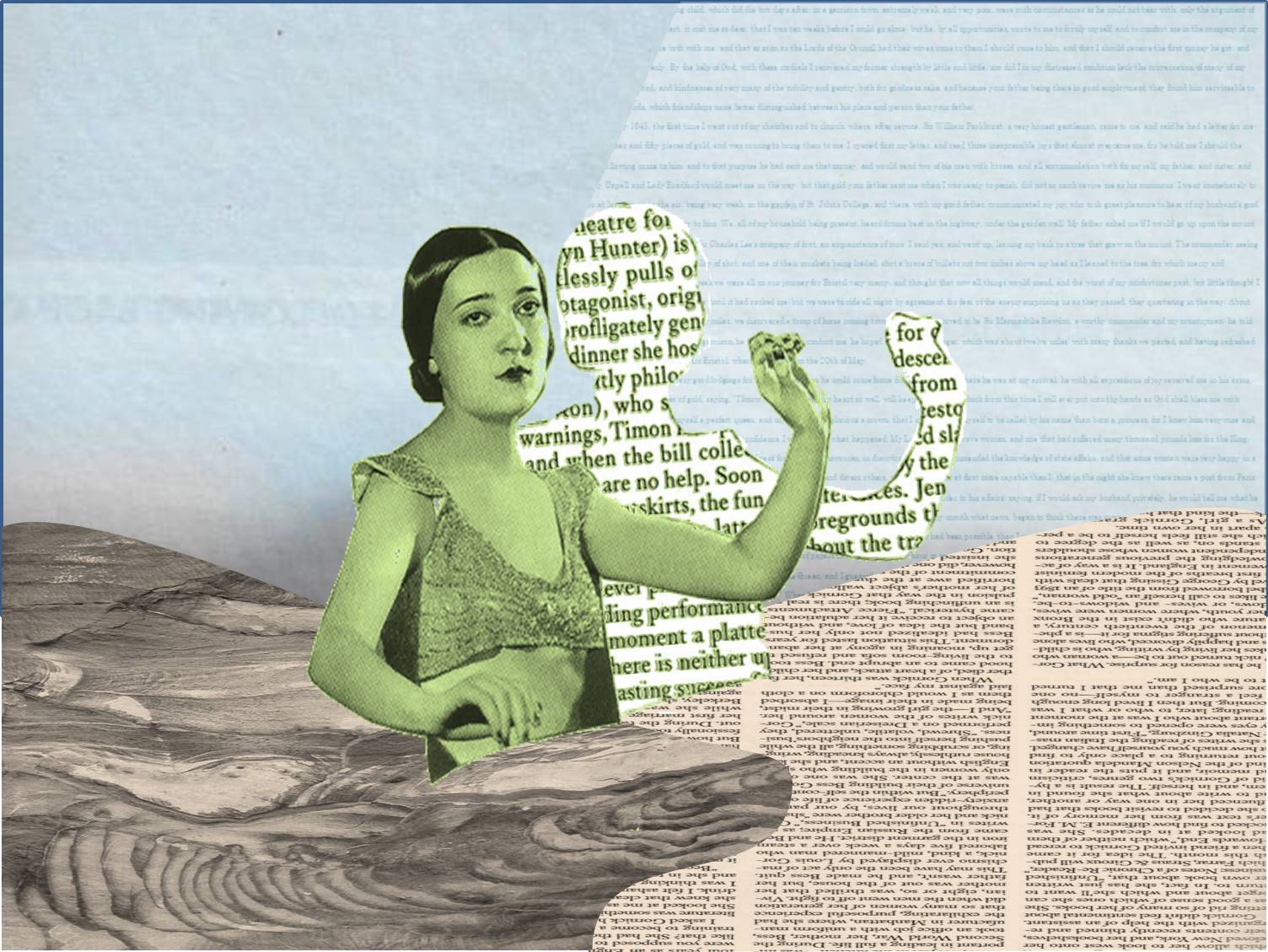
A fragmented text, a collection of elements braided together, a collage of sorts.
Julie Marie Wade’s “What’s Missing Here?” is a lyric essay about lyric essays.
Take the splintered pieces, the exquisite rubble of human brokenness. Pick them up, look at them from several angles, and begin to piece them together to create a pattern that pleases.
I mistrust the lyric essay; I welcome it; I don’t know what it is. ~Phillip Lopate
Randon Billings Noble’s A Harp in the Stars is an anthology of excellent lyric essays.
To write a lyric essay: chase an idea with all you have until it gains speed, bests you, and disappears beyond the horizon.

 Person on the Page
Leave a comment