My career-long exploration of contemporary memoirs has led me to examine stories in which writers choose to reveal family secrets—those skeletons that families try to keep locked in their closets, those uncomfortable truths that they choose not to share with others.
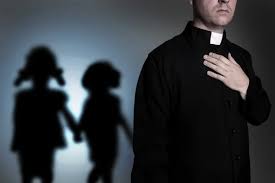
Two memoirs stand out for me as good examples of instances in which a daughter writes about her experience of sexual abuse by her father. These two examples have in common that the abusive father is a Christian clergyman.
Linda Katherine Cutting’s Memory Slips: A Memoir of Music and Healing, recounts Cutting’s experience of abuse by her father, a pastor in the Congregational Church, that Cutting claims took place from the time she was two until her adolescence. Kathryn Harrison’s The Kiss describes a sexual relationship between Harrison and her father, a Protestant pastor, that began when she was twenty years old and persisted for four years.
Both Cutting and Harrison offer as a reason for writing their memoirs their effort to recover from what they suffered at the hands of their fathers and to reclaim themselves and forge their own identities. Cutting writes, “I offer my story in the hope of redemption. That word can mean many things—to recover ownership, to restore honor, to save.” Harrison, who conceals her father’s name and church affiliation in her narrative in order to protect him, claims that her father’s exertion of full physical possession of her leaves her struggling to recover her sense of herself. She writes, “Having so long prayed for release—having begged fate for a deliverance . . . the loss of my father will [continue to] haunt me.”

Cutting’s memoir Memory Slips substantiates the theory that memories of traumatic events may be walled off, repressed, by the survivor. Cutting reports that she had no direct memories of the childhood sexual abuse until 1982 when, as an adult working as a concert pianist, she began to experience what she calls “memory slips,” the intrusion of unexpected fearful thoughts into memorized music during a performance. These “slips” increased for Cutting to the point that she was no longer able to perform solo concerts. Extensive therapy at the National Center for the Treatment of Trauma and Dissociation, which included recovered memory therapy, allowed her access to memories of repressed childhood experiences and inspired her to write her memoir.

In The Kiss, Harrison portrays her experience as an ongoing sexual relationship with her father in which she participated as a consenting adult. Nevertheless, similarly to Cutting, she reports having no direct memories of the experiences. She writes, “In years to come, I won’t be able to remember even one instance of our lying together. . . . I won’t be able to remember what it felt like . . . .”
These two family situations, Cutting’s and Harrison’s, which are driven by a father’s unlimited sexual access to his daughter, seem to be enabled by the authority that the father projects as a clergyman. In both cases, the daughters’ concepts of God and of their fathers become conflated. Harrison expresses the power that her father’s vocation holds over her by confessing that she associates him with God. When she first meets him when she is twenty years old, she reports that her thought was, “Father. My father. The word made flesh.” On the literal level, she expresses the fact that until that moment Father had been only a word, and that now she sees him in the flesh. But the connection she draws between her father and the Gospel of John’s description of Christ as the Word of God made flesh is clear.
Harrison’s father takes full advantage of the position he holds in his daughter’s view when he explains to her, “There are rules that apply to most people, and there are people who are outside of those rules . . . .” Her father need not follow the laws God has established for His people because, he suggests, he enjoys a kind of divine status. Harrison notes, “When the preacher in my father speaks, I lose what’s left of my power to defend myself. The words that might send most people running are the very words that trap me.” She is able to convince herself that a sexual relationship with her father is an acceptable decision, despite the wound that it inflicts on her mother and others, because her concept of God and that of her father have merged.
Similarly, Cutting suggests that God and her father were merged into the same being. She writes, “God, to me, was intrinsically bound up with my father . . . For my brothers, my sisters, and myself, God was experienced through the crucible of family. In our family as well as the church, our father and “Our Father” were one.” Sexual abuse is endured by the child because her father holds divine status in her mind and can dispense rules that are different from those established for other believers.
During the years following the release of these two books, both women’s fathers were asked by journalists for their response to their daughters’ stories. Harvey Cutting denied the accusations that he sexually abused his daughter when she was a child and blamed his daughters’ therapists and the therapeutic process for implanting what he characterized as false memories of the abuse.
Harrison’s father neither denied nor admitted to the sexual relationship with his adult daughter, but expressed concern over the memoir’s effect on his current wife and other children. Both authors’ books have been met with mixed responses by readers, some expressing skepticism about the veracity of the claims, and some suggesting that the authors should have waited until their fathers died before publishing their stories.
Both Cutting and Harrison insist that they chose to write their stories for therapeutic purposes, as a way of healing from the traumatic experiences. Both also chose to publish their stories, villifying their fathers and sharing their painfully personal experiences with a broad readership. Whatever their reasons for publishing, their stories provide vivid illustrations of the ways that positions of authority, whether imagined as divine or merely parental, can facilitate exertions of power by one family member over another, leading to the emergence of a family secret.
Surely these two writers’ stories serve, at the least, to raise awareness of the dangers of such power. Surely these stories might inspire those who have endured similar abuses to recognize their experiences as abuse, and to take meaningful steps toward healing.

 Person on the Page
Leave a comment