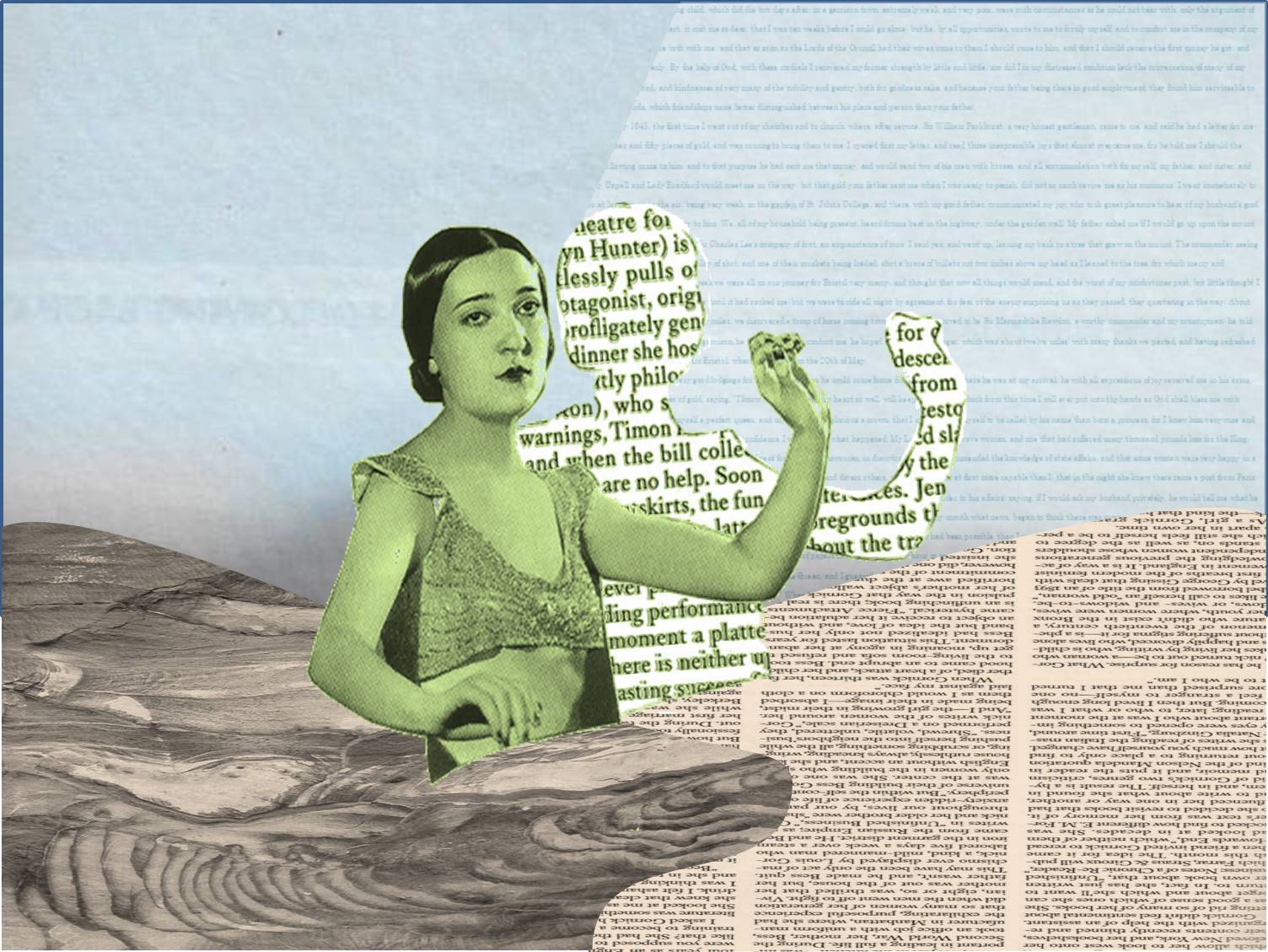

Mike Douglas introduced his next guest. We had one of those mahogany console black and white televisions that were popular in the 1960s. It reigned as the pot-bellied god of our living room at our house in McKeesport, Pennsylvania. Music played on the Mike Douglas Show as Lucille Ball walked onstage.
I recognized her from the re-runs of the I Love Lucy show that aired on weekdays. Every afternoon Mother drew the draperies on the living room picture window. “I don’t want the neighbors looking in at us,” she’d say as she worked the pulley on the traverse rod, ushering in a premature dusk in the house. The bluish glow of the TV lured me into an opiate haze as Lucy crushed grapes with her feet, or stuffed candy into her shirt at the chocolate factory, or swigged Vitameatavegamin. Lucy drifted in and out of my consciousness during my midday half-sleeps. I was four.

Mother sat on the love seat that matched our sofa, the curved-to-fit-a-corner two-seater that I liked to imagine was a seat on the train that we sometimes took from Pittsburgh to my grandma’s house in Cumberland, Maryland. When I played “train,” I carried my plastic jack-o-lantern trick-or-treat basket as my suitcase and wore my Mickey Mouse ears as my dress-up hat. When we made those train trips to Grandma’s house, Mother liked us to dress up. “People will be watching us,” she’d say. “We have to look our best.”
Absorbed in her work, Mother was hemming a skirt, not seeming to notice who was on TV. Periodically, she stuck her needle in the arm of the loveseat and sipped her iced tea. Then she cut a new piece of thread and continued hemming.
I was relieved that she was calm. She had been angry with me the previous day after our trip to the pediatrician’s office for my checkup. When the doctor was palpating my tummy, I blurted out that someone was coming into my bedroom at night after everyone had gone to bed. Someone stood over me, pulled up my nightie, tugged at my underpants, touched me. The doctor asked who the person was. I said I didn’t know.
“How dare you go storying to the doctor like that,” Mother said when we were in the car on the way home. Storying was Mother’s word for lying. “Don’t you ever cause trouble like that again.” After my checkup, the doctor had taken Mother into his office and left me in the examination room where a nurse spoke softly to me as she helped me get dressed.*
I was sent to bed early that evening. From my room, I could hear Mother talking to my father in the living room, her voice rising above the sounds of the evening news on TV. My father responded in what sounded like short mumbles. Later, after I had been asleep for a while, I felt someone’s breath on my face as I woke to sense a person standing over me. In my room, an odor hung in the air. It reminded me of how my mother smelled when she returned home one night from a dinner theater where she had gone to see Pearl Bailey perform. A mix of stale cigarettes, beer, and strangers.

On TV, Mike kissed Lucy on the cheek before he escorted her to a seat next to him on the stage. What ensued was probably an interview during which Mike asked Lucy about her current projects, maybe about her children. She probably related a funny story as talk-show guests tend to do. The two sat close to each other as if they were long-time friends. They smiled. They laughed. Lucy’s hair swirled gracefully around her head, and her fingernails, long and painted, caught my attention as she moved her hands when she talked.
At age four, I could not have known that by the time the show was airing, Lucille Ball and Desi Arnaz were divorced and Lucy had remarried. I could have no sense of the tumult of Lucy’s and Desi’s on-and-off screen marriage or of the matured, perhaps embittered Lucille Ball who sat on stage with Mike Douglas. I knew only the Lucy that Ricky Ricardo loved, the one who lived in the brownstone apartment building owned by the Mertzes. The Lucy who was beautiful, vivacious, and funny.

My four-year-old mind could not have fathomed that the talk show set was designed to present the host and his guest as intimate friends enjoying each other’s company. I couldn’t have understood how television bred desire in its viewers, a longing for the kind of untroubled enjoyment suggested in the shows and commercials that viewers watched in their homes, in the midst of their problem-blemished lives. Viewers became voyeurs, peeking through the window of the TV glass into a scene that suggested a carefree contentment they could dream of but never attain.
I wanted to be there in that scene of the Mike Douglas Show. I wanted Lucy to stroke my hair and call me her own. I longed for her to say that she would be my mother. I wanted Mike to welcome me while the studio audience applauded its approval. I wanted him to take charge as the host of our show and tell me that everything would be all right.
I went to the television set. I placed my hand on the curve of the warm glass screen, feeling the slight grit of dust on its surface, feeling static electricity snap on my palm. I thought if I could somehow get on the other side of that glass, I could be there. Standing so close to the screen, I watched the place where Mike and Lucy sat together break down into rows of gray and black horizontal lines.
“Get away from there!” Mother shouted, urged back from her absorption in her sewing to our living room in McKeesport, where her unpredictable child was again causing trouble. “What are you doing? Don’t touch the TV!”
I withdrew and took my place beside her on the loveseat. I could still feel the warmth of the screen on my palm. My arm tingled as if electrified.
*Note: I learned years later that when she was alone with him in his office, Mother told the doctor that I had been sick and had a fever for a few days. She said that I must have been hallucinating when I thought someone was in my room. She must have convinced him, because what I said to the doctor was not mentioned again after that day. Now, decades later, I have a foggy memory of a person standing over me and touching me while I lay in bed at night. I remember the feeling of the person’s breath on my face.


 Person on the Page
Leave a comment