
It happens to me regularly. Maybe it happens to you, too.
I’m writing something, and I think the work is going well. Then, after a while, I’m struck by the feeling that what I’m writing is dull and unoriginal, and that it lacks energy. Or I realize that what I’m writing is not the message I intended to convey. It doesn’t measure up to the message that was in my mind before I started typing. I feel the urge to leave my laptop and go empty the dishwasher, or go for a walk, take a nap, read a book, or go pull some weeds from the flowerbed. Even cleaning the bathroom sounds better than forcing myself to keep writing. Then I wonder what ever made me think I was a writer.
Lately I have been calling it The Stall. It’s that regular occurrence that has prevented me from making the progress and reaching the daily page count that I set as the goal for my writing during my summer break.
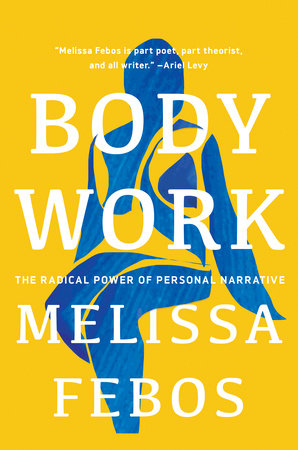
During one of those stalls a few days ago, I started reading Melissa Febos’s book Body Work: The Radical Power of Personal Narrative. To my surprise, in her second chapter Febos describes what I’ve been calling The Stall and offers advice about how to overcome it.
What follows is what happens to me as I write now, after reading Body Work. Hopefully this process will help me to get past The Stall. Maybe it could be helpful to you.
1. I begin writing. When I am several or many lines into the project, I realize that I am using safe language: familiar turns of phrase, sometimes clichés, or often-used words that don’t quite express what I want to convey. Has this happened to you?
2. I try digging deeper. I rally fresh new language to my work. I strive to express exactly what I want to say in ways that will attract and maintain my reader’s attention.
3. I keep writing. As I do, I realize that I may be shaping my own experience into one of many culturally accepted narratives. You know them. Here are a few.
- Life is a journey.
- A hero tackles an obstacle head-on and emerges from the struggle wounded but wise.
- One finds fulfillment by taking the road less traveled.
- A man finds meaning by protecting and providing for his family or others who depend upon him.
- A woman reaches fulfillment by finding true love.
Do you find yourself leaning on common narrative threads as you write about your own experiences? Nothing is wrong with these familiar narratives. They are necessary for perpetuating cultural values. They are important, valid, and needed. But does adopting one of them subvert or eclipse what we might potentially share with our reader? Does it force us to repress what is valuable about our experience in favor of perpetuating the culturally accepted story?
4. I try to dig deeper. To drill past the meta-narratives that are so familiar to us that they lure us into their matrix. I am willing to break new ground in order to find the way to convey my experience most effectively.
5. At some point, my writing stalls. I feel that what I have written so far is all wrong. Or that it is just not good writing. Or that it isn’t what I set out to do at all. I wonder why I think I am a writer. I wonder if writing is worth all the disappointment. Has this happened to you?
6. Here’s where Febos, in Body Work, steps in and flips on the light switch. She writes
Over the years, I’ve come to look forward to the point in my writing at which continuing seems both incomprehensible and loathsome. That resistance, rather than marking the dead end of the day’s words, marks the beginning of the truly interesting part.
When I first read that, I was skeptical. But I also sensed what felt a little like hope. Are you feeling it, too? Febos continues
That resistance is a kind of imaginative prophylactic, a barrier between me and a new idea. It is the end of the ideas that I already had when I came to the page— the exhaustion of narrative threads that were previously sewn into me by sources of varying nefariousness or innocuity.
When I read that, I felt somewhat relieved. My dissatisfaction with what I write might not be due to my inability as a writer, but rather to the familiar “narrative threads” that have been instilled in me by my culture. Recognizing this possibility allows me to believe that I can find a new way of writing my message. Febos concludes
It is on the other side of that threshold that the truly creative awaits me, where I might make something that did not already exist. I just have to punch through that false wall.
That’s exactly the feeling I have had when I’ve experienced The Stall. As if moving ahead with my writing would be as difficult as punching through a wall. But Febos tells us that it’s a false wall. We can write our way through it. And finally, she reminds us
There are so many ways to write a thing, so many ways that only [you] could write it.
What do you think? When we seem to hit a wall with our writing, is it really an opportunity to discover a new, more inventive, more effective way of expressing ourselves? Is that really the beginning of the interesting part?
I’m going to assume that it is. I’m going to keep writing to test this idea.
I hope that, whether you feel successful or discouraged as a writer, you will keep writing, too.


 Person on the Page
Leave a comment