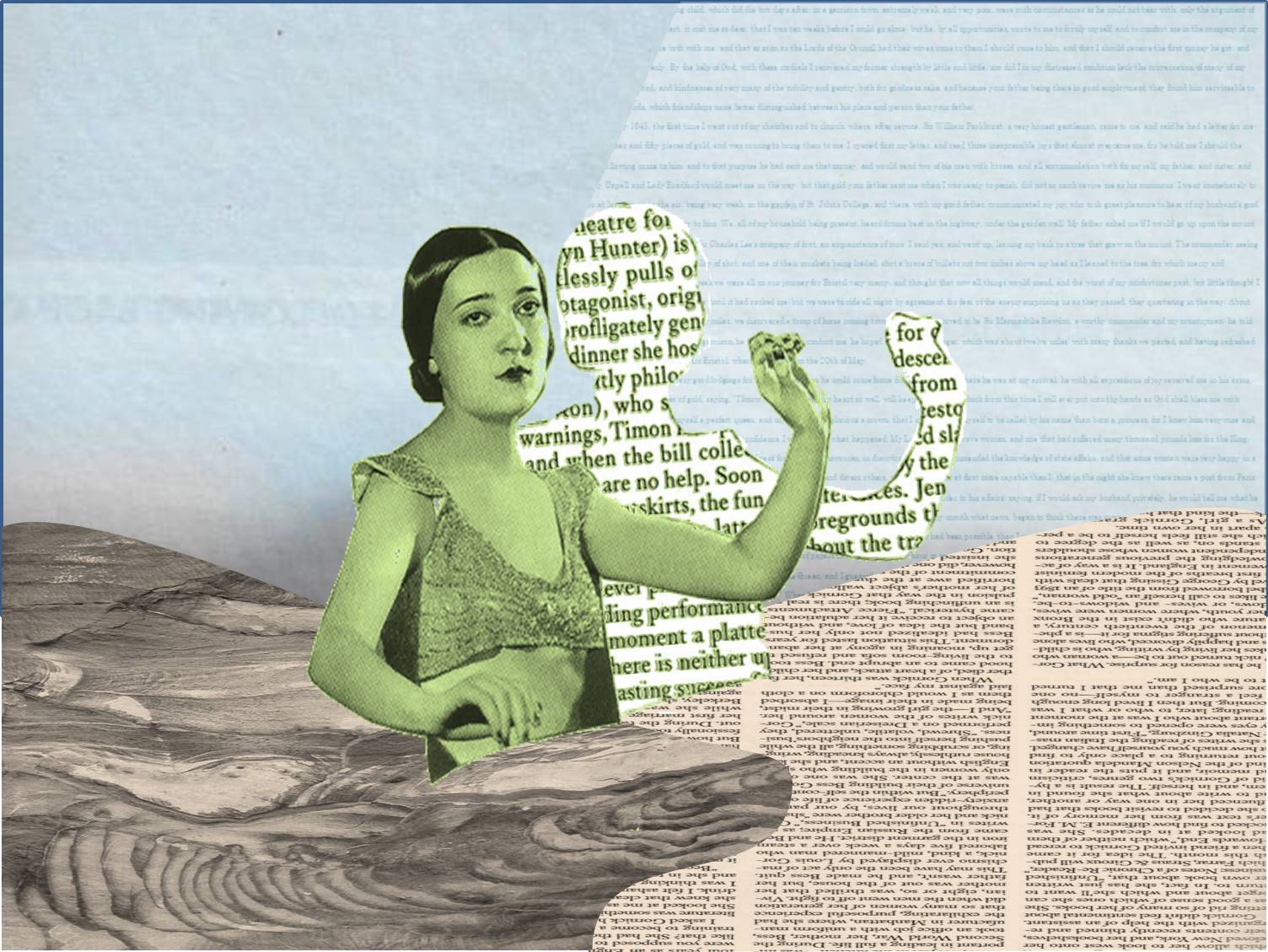

Mudholes complicated travel on the frontier beyond Detroit.
In 1836, in a wagon loaded with household goods and six children, Caroline Kirkland and her husband William lumbered toward the tract of land they had purchased on speculation. They planned to make a new home, and hopefully a handsome profit, in the West. They had already decided that the mill town they would build would be named Pinckney after William’s late brother who had died in childhood.
When she wrote about her initial impressions of the frontier, Kirkland portrayed her first glimpse of the region as an encounter with Michigan mudholes. She described herself descending from the wagon into the wild-flowered damps of the forest, wearing the flimsy slippers she had brought with her from her home in New York, footwear suitable for attending the theater or the literary clubs of which she was an admired member, but not for the marshy ground of this new place.
She recalled a man in a coonskin cap emerging as if from nowhere with a pole in his hand that he used to plumb the depth of the mudhole before them. He deemed it too deep for the wagon wheels to pass through. They would have to maneuver around it.
~~~
I was unhappy, exhausted, and sick. Life in my small western Maryland town seemed hopeless. Dreamily, I said to a friend, “I wish I could disappear from my life here, pop up somewhere else on the map, and start over.”
A few weeks later, that is exactly what happened.
I was offered a job at a university in southeastern Michigan. I uprooted myself from my lifelong home and moved. I was gambling, I knew. Wagering on something better than I had known so far.
Soon, I was the new Americanist at the university. One of my first faculty assignments was to teach a course in early American literature. Some of the students in my class would be education majors who would eventually teach English in area high schools. I was told that it was important to familiarize them with historical Michigan authors.
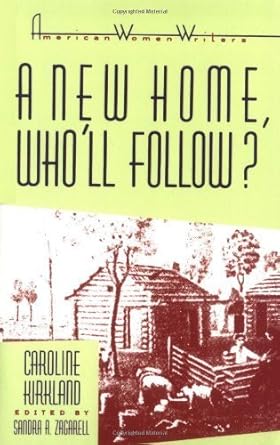
I first encountered Caroline Kirkland’s memoir of pioneer life A New Home, Who’ll Follow? in a graduate seminar on environmental writing at West Virginia University. I searched for my copy among the books I brought with me from Maryland. I realized that I was now living just a short drive from Pinckney, the town founded by the Kirklands.
As I prepared to lead my students in reading and discussing A New Home, I began to feel a kinship with her. During the nineteenth century, she left her east coast home and headed to what was at that time the western frontier. She started a new life in a new place, determined to re-invent her concept of home.
During the twenty-first century, I left my east coast hometown and headed to what is now the Midwest—to the same place that Kirkland, long before, had invented her new home.
Traveling alone and settling on the outskirts of Detroit, I felt like a pioneer. Of course, I traveled by car and enjoyed the luxury of the Pennsylvania and Ohio turnpikes. I did not have to travel in a wagon through Michigan mudholes as Kirkland had.
But the spirit of adventure was surely much the same.
~~~
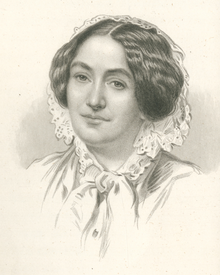
Kirkland found the inhabitants of her new home uncultivated and unrefined. She would later conclude that association with this population threatened to degenerate the more sophisticated East Coast speculators who invested in the area.
Her memoir sometimes pokes compassionate fun at the inhabitants of the Michigan frontier. At other times, it lampoons them mercilessly.
Kirkland wrote to an audience of her East Coast peers under the pseudonym Mary Clavers. She gave the village that she and her husband founded the fictitious name Montecute. She assumed that these maneuvers would disguise her identity from her Michigan neighbors.
Her book enjoyed great success in New York, establishing her place within a literary community that included her British contemporaries Charles Dickens and Robert and Elizabeth Barrett Browning. Edgar Allan Poe praised her, numbering her among the New York City literati.
~~~
When I arrived in Michigan, I found the population to be richly educated and intimidating in their sophistication. Considering my humble Appalachian roots, I felt out of place.
Perhaps I was encountering the descendants of the pioneers who settled the area. Their determination to create a home on the frontier led to generations of people who valued the very things that pioneers had to sacrifice: intellectual pursuits, the social graces, sophistication.
I moved to Michigan, wondering how a lone woman from humble origins could insert herself into a new place. How she places herself among a new population of others. How she invents home.
I settled into an apartment just east of Ann Arbor and began my work at a small university that hid in the shadow of the University of Michigan.
~~~
Despite her assumptions that her book would not make its way to the Western frontier and ultimately to her own neighbors, it did.
It was received with resentment and sometimes with open hostility. Kirkland and her husband were all but ousted by the town they had founded. They returned to New York in 1843.
Little surprise then, when I went to Pinckney in search of some landmark, a sign, a plaque, some marker of the original Kirkland settlement, I found none. Apparently, Pinckney was gladly rid of its founding matriarch, and the disfavor she earned with her depiction of their foibles lived on.
After its brief zenith in the early nineteenth-century literary world, A New Home fell into obscurity. It has only recently been recovered by historians and feminist literary scholars.
Her story is useful, though, as a testament to the role of women as the arbiters of civility and domesticity during the nineteenth century and to the challenges those women faced when they were expected to load, tote, and bear that domesticity into unsettled, uncivilized territory.
~~~
What do Caroline Kirkland and I have in common? Other than our similar trek from the East Coast to Michigan, very little.
But about the way that home is conceived and invented, her story and my story both suggest this:
Home doesn’t just happen. Home is intentional.
To make a new home, we turn the earth. We plant ourselves in new soil.
For a time, home may be just a table. Food. The feeling of safety. A place to sleep undisturbed.
A new home is made from the remnants of earlier lives: books, dishes, blankets, the dialects of the past.
Home is an idea we pack into vehicles and carry over miles.
To create a new home, we place ourselves into a new world of others. No matter the complications, we take our place among neighbors.


 Person on the Page
Leave a comment