
Tall and muscular, Jake had a ready laugh and boyish smile. An enticing blend of artist, musician, and athlete, he caught my eye during my freshman year of college. He and I were enrolled in some of the same courses, where we discovered that we had grown up near each other, just a few streets apart.
Both of us were First Gens, fired up with ambition and enthusiasm because we were the first in our families to have a shot at earning a college degree.
I was impressed that in his freshman year Jake was appointed the staff artist for the campus newspaper. A talented drummer, he was forming a band, hoping to help pay for his education by playing local gigs.
He was impressed, he said, that the paper had accepted some of my op-eds for publication and that I had been tapped to serve as its copy editor.
As I struggled with feeling out of place and inadequate among my more affluent classmates who had college-educated parents, Jake was an oasis of hometown familiarity. His easy smile conveyed all the comforts of a home-cooked meal. I understood where he had come from and what he, as a First-Gen, was up against. I got him. And he seemed to get me.
We started hanging out together between classes. Soon we were dating. We were both smart, ambitious, and discovering ourselves. A winning combination, it seemed.
Winning, in fact, was a passion we shared.
College brought out the inborn competitive spirit in both Jake and me. Our relationship soon fell into a series of playful, good-natured contests. Which of us would outdo the other?
Who would score higher on the calculus exam? I won that one.
Who could name all the Queen songs written by Freddie Mercury? He won.
Who could do the most pushups? He definitely won.
Who would finish the term paper for our sociology class first? I won.
Since we were both trying to pay our own way through school and were always on tight budgets, our dates consisted mostly of trips to one of a few fast-food restaurants. One evening, we ended up at McDonald’s, lugging our textbooks with us for a combined date and study session.
I was sipping my Coke when Jake began with one of his regular conversation openers.
“Betcha can’t.”
“Can’t what?” I always fell right into his trap.
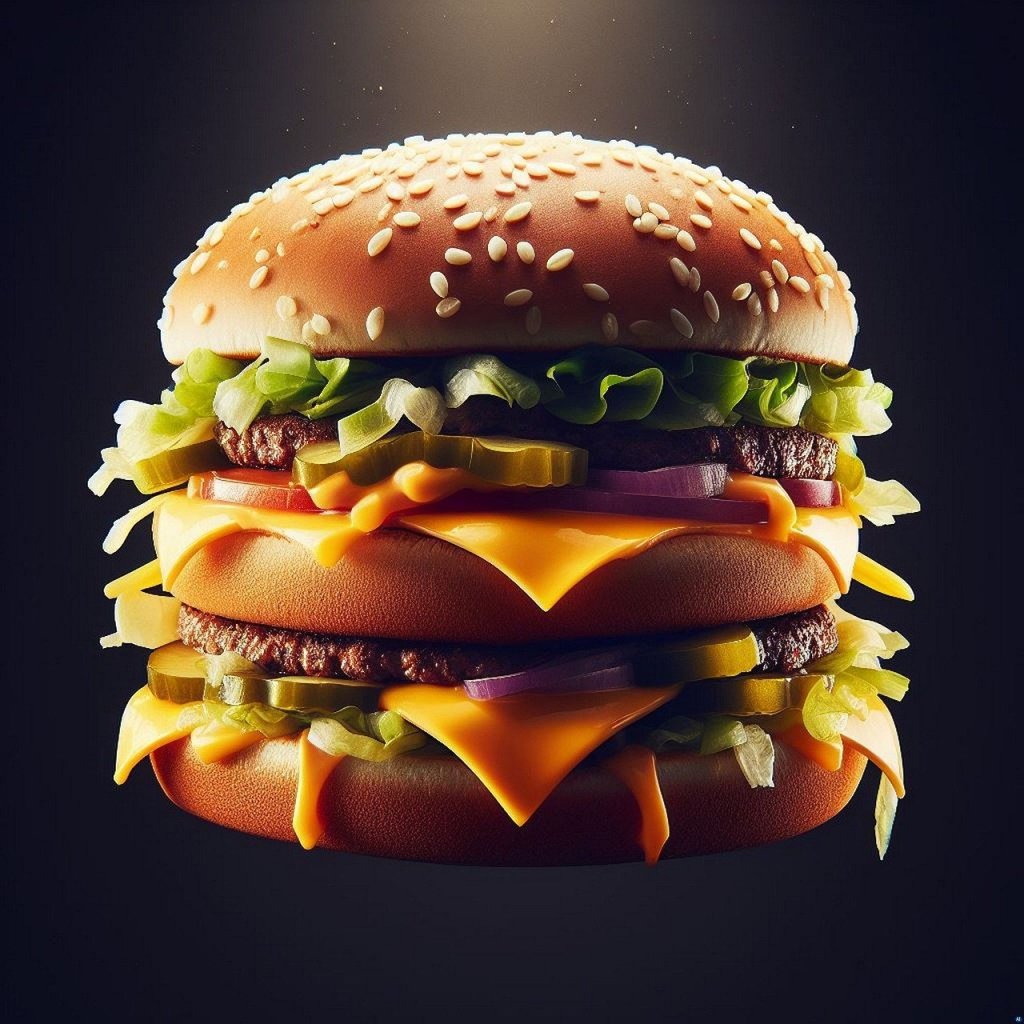
“Can’t eat three Big Macs.”
“Oh, I bet I can eat three Big Macs,” I said. I had never eaten three in one sitting before, but I liked Big Macs and I had a voracious appetite.
“Betcha can’t eat TEN Big Macs.” He smiled. He knew he had me.
“Hmm . . . ,” I said.
How Life Prepared Me for the Dare
When I was growing up, my parents were clean-plate enthusiasts whose mission was to get every morsel of food on the plate successfully shoveled into their child. Mounds of sunny-sided eggs braised in butter for breakfast, followed later in the day by piles of meatloaf, mashed potatoes, gravy, and peas. Breakfast, lunch, dinner—hungry or not, I was on an eating schedule that had to be maintained.
The rule I learned from my parents was that if food is placed in front of you, you are obligated to eat it. No questions.
During my teens, I was a proud member of the junk food generation—high schoolers whose social lives revolved around wolfing down burgers, fries, milkshakes, bags of Doritos and sour-cream-and-onion potato chips dunked in Hidden Valley Ranch dip. All of that washed down, of course, with Pepsi, Dr. Pepper, Sprite, or some other sugary soda.
As a college student, I had a hyperactive metabolism that could still easily process all the calories heaped up by my dangerously poor childhood and teen eating habits. Weight gain would come later. But at that time, I could eat all I wanted and stay thin.
So, why not?
My Baby Step into Competitive Eating
Jake and I emptied all of the money from our wallets onto the table. We would keep eating Big Macs, we agreed, either until one of us couldn’t eat any more or we ran out of money. Whoever had consumed more at that point would win. Jake went to the counter to place our order.
I was right. I ate three Big Macs with no problem. Then a fourth. By that time, Jake had eaten six and was on his way to the counter to order us two more.
After the fifth one, I couldn’t eat another bite. I held up my hands in surrender.
“Five ?!? You ate five? Wow!”
Jake slapped me on the back and congratulated me as if I had just received a gold medal at the Olympics. “Wow! What a girl!”
He seemed elated. Proud. Something about my ability to down five Big Macs turned him on.
He kept eating until he finished eight. Then he gave up.
Considering that he was over a foot taller than I was and weighed about 50 pounds more, he reasoned, I had bested him. I had won.
At first, I felt a thrill of triumph. He was making such a big deal about our competition, after all. I had been challenged and, all things considered, I had come out on top. Jake seemed so impressed with me. I was a winner.
After a short time, however, my feelings began to change. The jingle with which McDonald’s promoted their signature sandwich at the time played in my mind. Two all-beef patties, special sauce, lettuce, cheese, pickles, onions on a sesame seed bun.
I had just eaten 10 beef patties, five double-decker buns, globs of sauce, and 10 slices of cheese. Why? Because I had been dared to do it. Sure, the contest had been harmless enough. But I had been so easily compelled by the urge to compete.
I was starting to feel uncomfortably stuffed and a little ashamed. I experienced my first-ever twinge of heartburn.
Jake remained excited about the idea that he was dating a girl who could—and would—eat five Big Macs at a time.
“Maybe we should think about getting engaged,” he said.
Competition Is Healthy, but . . .
Jake and I did not get engaged.
After our freshman year, he decided to major in economics. He got caught up in the desire to compete for wealth in the corporate world. After graduating, he went to work for a couple of Fortune 500 companies and accumulated his fortune.
I majored in English and delved into philosophy and psychology. I got caught up in competitions for academic recognition and went on to graduate school where I stacked up degrees.
During the rest of our college years, we drifted apart.
When I think back to eating all those Big Macs, I chuckle. But I also cringe.
What would a long-term relationship based on a mutual passion for competing have led to? Would I have been pulled down a slippery slope of increasingly more risky dares, to which I would have felt driven to respond? I picture myself being convinced to attempt death-defying feats to keep winning Jake’s admiration and approval. Could that have happened?
Slippery-slope thinking might be silly, I suppose. But is it?
Would our common passion for winning have turned Jake and me eventually into bitter rivals? Would we have ended up enemies?
Thankfully, I’ll never know.
Cover Image: Pixabay


 Person on the Page
Leave a comment