A Meditation for When You Feel Stuck in Your Writing
I grew up surrounded by my mother’s big family in the northeastern reaches of Appalachia. Mother and her eight siblings were products of the Depression — hard-shelled, thrifty people who remembered what it was like to go hungry and live without warm clothing and well-fitting shoes. They learned to hang on to every dollar they made for as long as possible.
Grandmother fed her nine children through hard times on beans and cast-off vegetables such as turnips, collards, and wild greens that grew along the dirt roads outside of Cumberland, Maryland. Mother learned to cook legumes and vegetables in her mother’s kitchen, and she kept up the habit long after she could afford the foods enjoyed by more financially comfortable people.
When I was a child, Mother made soup from dried beans and accompanied it with cornbread or scratch biscuits. Great Northerns, pintos, kidney beans, split peas, chickpeas, and lentils — she simmered them for hours on the stove with her standard base of celery, carrots, and onions, seasoning the broth with thyme, oregano, or sage — and a bay leaf in every batch.
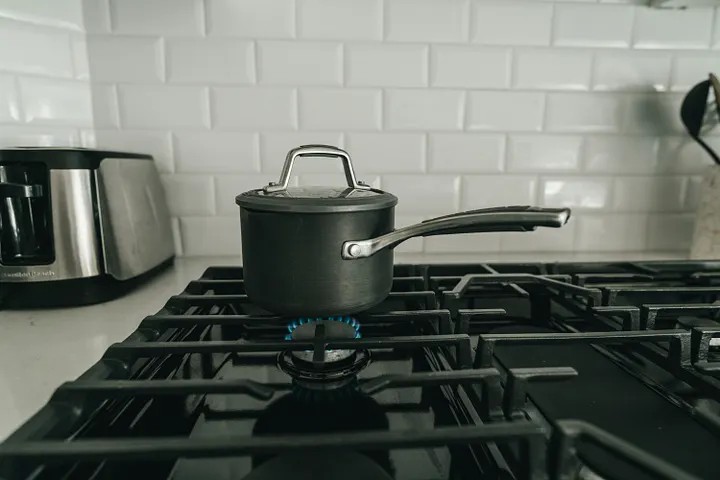
I learned to cook beans the way Mother did, and now I occasionally let a pot of them simmer on the back burner of my stove while I’m busy writing, walking the dog, practicing yoga, or doing laundry. I can forget them for a few hours, knowing that when I return to the stove, they will be tender and their broth savory. I will have what is known in my house as Back Burner Bean Soup.
When we say we are putting something on the back burner, we generally mean that it is low on our list of priorities. It doesn’t need our immediate attention. It can wait. That faucet in the bathroom with a lazy little drip? Not an emergency. The piles of family photos we’ve been meaning for so long to organize and digitize? They can wait a little longer. Cleaning out the garage? We can close the door, go into the house, forget the mess, and tend to more urgent matters.
Putting things on the back burner may be a way of procrastinating, but it can also be a way of maintaining our sanity when our life seems to have boiled down to an overcrowded to-do list. It’s a way of recognizing what’s important and what is less important. What is urgent, and what can wait.
When we think of our writing, though, I believe the back burner is a place where some of our best work can take place. I don’t mean that we should minimize the importance of our writing. Never! And I don’t mean that we should put off writing, letting other things on our to-do list crowd out our opportunities to write.
I mean that sometimes a crucial part of our writing process takes place when we are not writing. It happens when we purposely send a writing project to the back of our mind, away from our immediate, conscious attention. When we do, our unconscious mind has a chance to send us the signals we may need to unlock and vitalize our writing. We get out of our own way, so to speak, when we allow the deeper recesses of our minds to contribute to our work.
For instance, say you’re stuck in a writing project. You can’t find the right words to say what you mean, or you don’t know where you’re headed with a piece. A character in your short story refuses to come to life. That pivotal word in a poem — rich with multiple meanings that will set your verse on fire — just won’t present itself. Or you know you want to write an essay about solitude, say, but you don’t yet know exactly what you want to say about it.
You’re stuck.
That’s the time to take advantage of the back burner. Stop writing. Do something else. Allow your mind to work on the problem on its own, independent of your conscious attention. Be open to receiving signals from your unconscious mind.
For me, a back-burner meditation often involves cooking. I stop staring at the point in my project where I’m stuck, leave my computer, go to the kitchen, and pick up a knife.
I chop vegetables. The rhythmic act of chopping can be a meditation — focusing the mind’s attention on a single task. The sound of the knife slicing through moist, crisp vegetables — that’s a mantra. The vibrant orange of carrots, the pungent aroma of onions, the juicy ooze of tomatoes — all that sensory stimulation lures my conscious mind into the present moment so that my unconscious mind can do its work.
But it doesn’t have to be cooking. For you, it might be changing the oil in your car. Or sweeping your front porch. Going outside. Chatting with a neighbor. Or even tackling that leaking faucet. All of these activities can occupy your consciousness so that the deeper, more creative regions of your mind can do their work.
As you engage in your chosen activity, when sudden sparks of inspiration or subtle hints speak to you from the back burner, take note. Type a few lines into your phone, or jot down what your mind presents to you on a notepad. Then keep doing what you’re doing. Allow your writing project to simmer gently in the back of your mind, knowing that you will reap the rewards later.
Sometimes, an important part of writing is not writing. Let the mind do its work. Put your writing on the back burner. Let it cook there awhile. Then return to it and see what has happened while you were gone.
……….
Try this:
1. When you’re feeling stuck in your writing, get up from your computer or from that blank sheet of paper. Walk away.
2. Do something else — something that engages your senses and your attention. A repetitive activity — like walking or knitting, or chopping or sweeping — may be best. But do something other than writing.
3. When bits of inspiration — a word, a phrase, an image, or even a full outline of your project — bubble up into your conscious mind (and they will!), capture them. Take a few notes. Then go back to what you were doing.
4. Later, see what the time away from the page has done for your writing. Feel yourself unstuck, inspired, and ready to create.
And know that it all happened on the back burner.
Cover Photo by Henry Kobutra on Unsplash

 Person on the Page
Leave a comment