
Try this.
Consider that subject about which you have had trouble writing. A difficult experience, a problematic person in your life, an emotionally challenging circumstance. That subject that you want to write about, but when you try, the writing turns out dull, awkward, or lifeless.
Yes, you know the subject.
Rather than trying to write a conventional narrative about that troubling topic, abandon your effort to make narrative sense of it all. Instead, write down bits of memory, impressions, expressions of emotion, or visual images connected to the subject.
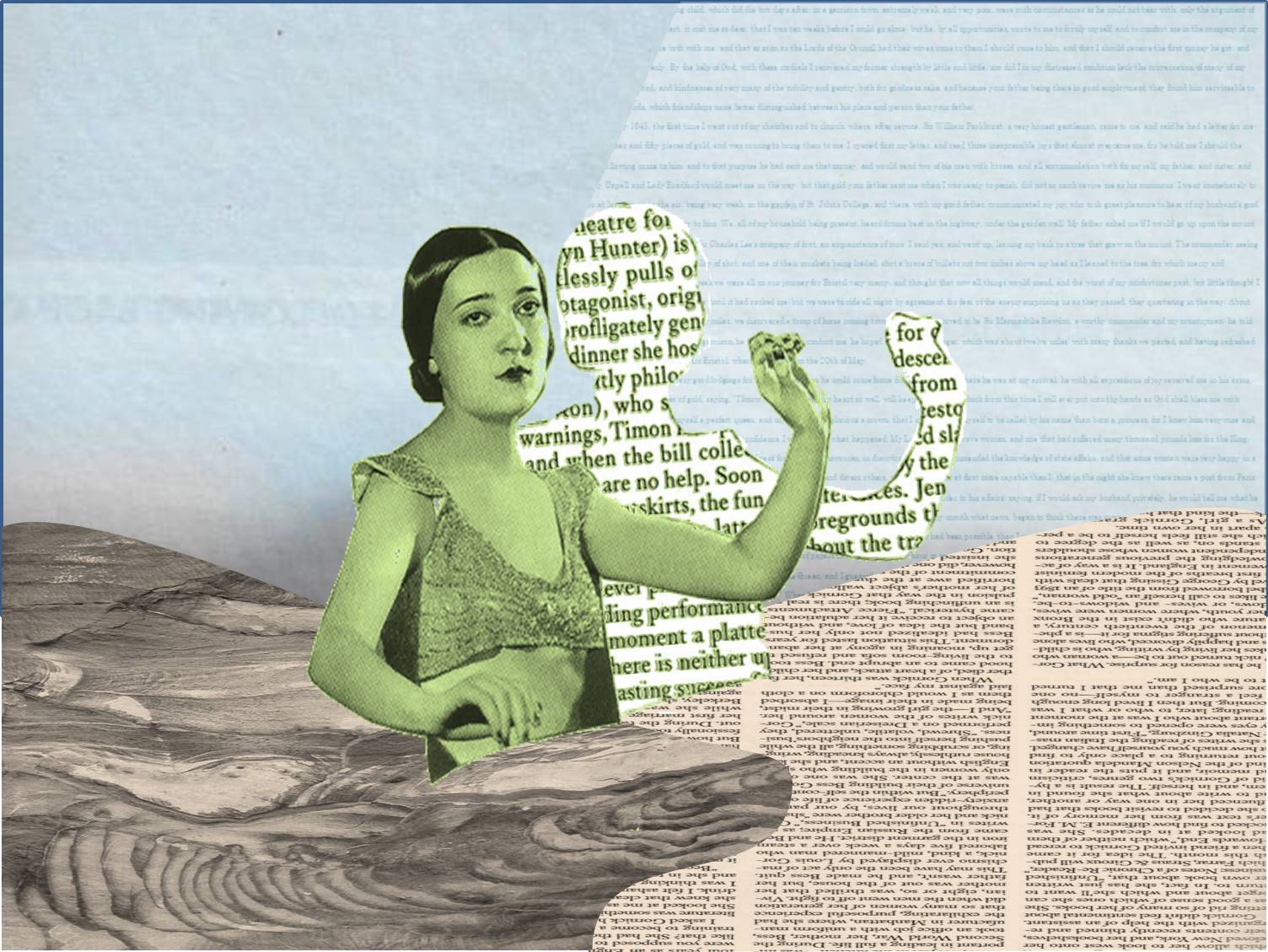
These disconnected pieces can be juxtaposed on the page to create a collage essay. This genre of personal essay allows the writer to combine written fragments skillfully to create an aesthetically pleasing whole. It also allows the writer to approach difficult subjects that do not lend themselves to traditional narrative.
Memories, especially memories of emotionally charged or traumatic events, come to us in fragments. We recall images, impressions, sounds, or smells, and we feel the emotions that we associate with them. Our minds naturally try to create a story from these fragments. But, because of the emotional impact of the memories, we may feel that we cannot convey the story effectively in writing.
Try collecting those fragments on the page. Express them through any of several non-narrative means. For instance, if you are writing about a person with whom you have a complex or conflicted relationship, your fragments might take some of these forms.
- A vivid detail about the person’s appearance or personality
- A set of instructions for coping with the person
- A list (of your complaints about the person, of the person’s strengths or weaknesses . . .)
- A scene in which you and the person interact
- A dialogue between you and the person
- A fable or fairy tale that captures the relationship between you and the person
- Description of an object you associate with the person
- Description of your physiological response to the person or the person’s actions
Then, try this.
1. Experiment with writing fragments about the subject until you find a pattern, a repeated idea, or a motif among some of them.
2. Arrange the related fragments in a way that allows them to convey a whole picture.
3. Avoid writing conventional transitions between the fragments. Instead, connect them through repeated words, phrases, or images.
A good example of the assembly of fragments into a cohesive text, a collage essay, is Dinty Moore’s “Son of Mr. Green Jeans.” In it, Moore collects his disconnected thoughts and memories about fatherhood and arranges them alphabetically. His essay serves as a model of the form and an illustration of the way non-narrative writing can convey a revealing profile of the self.
By choosing not to force our emotionally charged memories into a conventional narrative form, we give ourselves the freedom to more fully explore them and, by writing about them, to better understand them.
Writing a collage essay is one good strategy for approaching the subjects with which we struggle. It’s a great way to get the person on the page.


 Person on the Page
Leave a comment