

David and I spend most of our evenings together in our new home. A pair of later-life newlyweds, we devote the time to bringing our two, already-full lives together and merging them into one new shared life.
At the end of each day, we come together for bits of conversation, the luxury of comfortable silences, camaraderie with our two dogs, and often some laughter. As our days pass, we inch toward the familiarity and ease of the long-married.
One evening last week, though, David had a dentist appointment, and I was home alone. After browsing the offerings on Hulu, I decided to watch the CNN docu-series The Many Lives of Martha Stewart.
Many lives. You and I both, sister.
While Martha was soaring publicly to the heights of the New York Stock Exchange and then plummeting to the depths of West Virginia’s Alderson Federal Prison Camp, I was privately hanging on tight through my own rollercoaster ride.
. . .
I was a young wife and mother in the 1990s. My family and I moved into our newly built house in what realtors called the most desirable neighborhood in our small town. By the world’s standards, the house was modest, but everything was new and bright and built according to my specifications.
A two-story colonial, stately gray with slate blue shutters. Oak chair rail painted in what I thought were tasteful accent colors. On the windows, swags and jabots that I made and hung myself.
I began homemaking there, hoping to create in that place a haven of safety, comfort, and happiness. I wanted to make it, in the words of my idol Martha Stewart, a good thing.
I was tardy to Martha Stewart fandom. I bought her premier 1982 book Entertaining in 1992, shortly before we moved into our new house. The book would be my manual for success as a homemaker, I thought.
I was one of the cookie-baking, stay-home moms that Hillary Clinton was accused of bashing, a forgotten quantity at a time when women had already left full-time homemaking en masse to pursue their dreams in the public sphere.
The book Entertaining is about just that, and I wanted to be a good hostess. I had the predictable list of potential guests: friends from church, parents of my children’s schoolmates, members of my extended family, in-laws. I had a brand-new home that I’d worked passionately to decorate. I wanted to welcome others into it. Entertaining would show me the way.
Martha promised that her book was meant for me. In its introduction, she offered this explanation of its purpose to her readers.
It is not intended only for the culinary elite, who are working to refine their cuisine, but especially for all those people who regard cooking as ‘preparing meals,’ as drudgery or duty–and entertaining as an even greater worry. For them, I hope to show that there are many ways of entertaining and that each ultimately depends not on pomp or show or elaborate technique, but on thought, effort, and caring–much like friendship itself.
Sadly, Martha lied.
Instead, the book’s purpose seemed to have more to do with creating feelings of inadequacy and dissatisfaction in women like me. Women who aspired to recreate the idealized domestic sphere pictured in its vibrant photographs in their own average, middle-class homes situated on standard quarter-of-an-acre plots.
In the section of the book on “Creating an Ambience,” for instance, Martha advised me that as I planned “a formal dinner for twenty-four,” I should convert my coat closet into an impromptu bar where guests could serve themselves.
If I created this bar, where was I to stash the contents of my coat closet: the vacuum cleaner, a couple of brooms, my children’s snow boots, the dog’s leash, and, of course, my family’s coats? And how, in my modestly-sized house, could I possibly seat twenty-four for a formal dinner anyway?
Instead of a common dessert party, Martha suggested, why not make it a soirée dansante for forty? She advised that I “add ballgowns and black tie; pull up the rugs in the living room and add dance music.”
I’m sure the rugs in Martha’s living room were hand-woven in India of the finest virgin wool, and that they could be manageably pulled up for such an event. But I had what many middle-class women at the time had: wall-to-wall carpet from Sears.
Entertaining Martha’s way would have to be only a fantasy for me. But it was a fantasy I held close and fussed over. Why couldn’t I be the hostess that Martha, in her nineteenth-century restored farmhouse with its four acres of cultivated gardens, obviously was? Why couldn’t I achieve at least a scaled-down version of Martha’s grandeur?
A soirée dansante in my garage for ten, perhaps?
The book promoted a level of entertaining that was well out of reach for many of its readers. Beyond that, it portrayed its author’s cooking, baking, decorating, home-management, and party-planning skills as perfect. It portrayed Martha herself as perfect.
I felt like a failure. I thought I needed to know more, to have more, to develop more ingenuity, to cultivate in myself more of a sense of elegance.
More. I needed more.
. . .
Martha was smart. She made herself one of the wealthiest women in the nation by championing the nineteenth-century idealized domesticity that American women had rejected in favor of careers, by making it look lavishly attractive, and by selling it to those women as if that was what had been missing in their lives all along.
And I bought it.
When Martha signed on with K-Mart and marketed her signature good taste to average women, I was there. I bought up her robin’s egg blues and pale mint greens. Her high-thread-count sheets and superior bread-baking pans.
The more obsessed I became with the impossible dream of domestic grandeur that she was selling, the more unhappy I became.
Within me hid a tiny seed of latent perfectionism. Martha Stewart watered that seed and fortified it with Miracle-Gro.
. . .
In 1990, Martha’s marriage ended. That event marked the demise of the myth of domestic bliss she had created in Entertaining and the beginning of her reign as one of America’s most successful businesswomen.
In 1999, Martha Stewart Living Omnimedia became a publicly-traded company. Martha became a billionaire.
Around that time, I fled the un-bliss of my own domesticity and went to college. I had proven myself inadequate to the tasks of making the ideal home, cooking the perfect meal, and entertaining with flash and panache.
My efforts to emulate Martha’s perfection had failed. I went searching for an arena in which I might achieve something closer to perfection than I had attained as a homemaker. I found it in academia.
A few years later, my own marriage ended.
I don’t blame Martha for my unhappiness. I was an adult. I made the decision to follow the dream she set before American women.
By the time Martha was serving her sentence at the women’s prison in Alderson, West Virginia, I was completing doctoral studies at West Virginia University in Morgantown and writing my dissertation.
My perfectionism dashed my dreams of domestic bliss. I held myself to unrealistic expectations and condemned myself when I did not meet them.
But my perfectionism also fueled my achievement as a college student, scholar, and eventually as a college professor. Because of my perfectionism, I maintained an outstanding grade point average as an undergraduate, received awards for my writing and teaching in graduate school, and earned recognition from my colleagues and students as a professor.
Perfectionism has two sides: one destructive; the other conducive to success. I have experienced both sides.
. . .
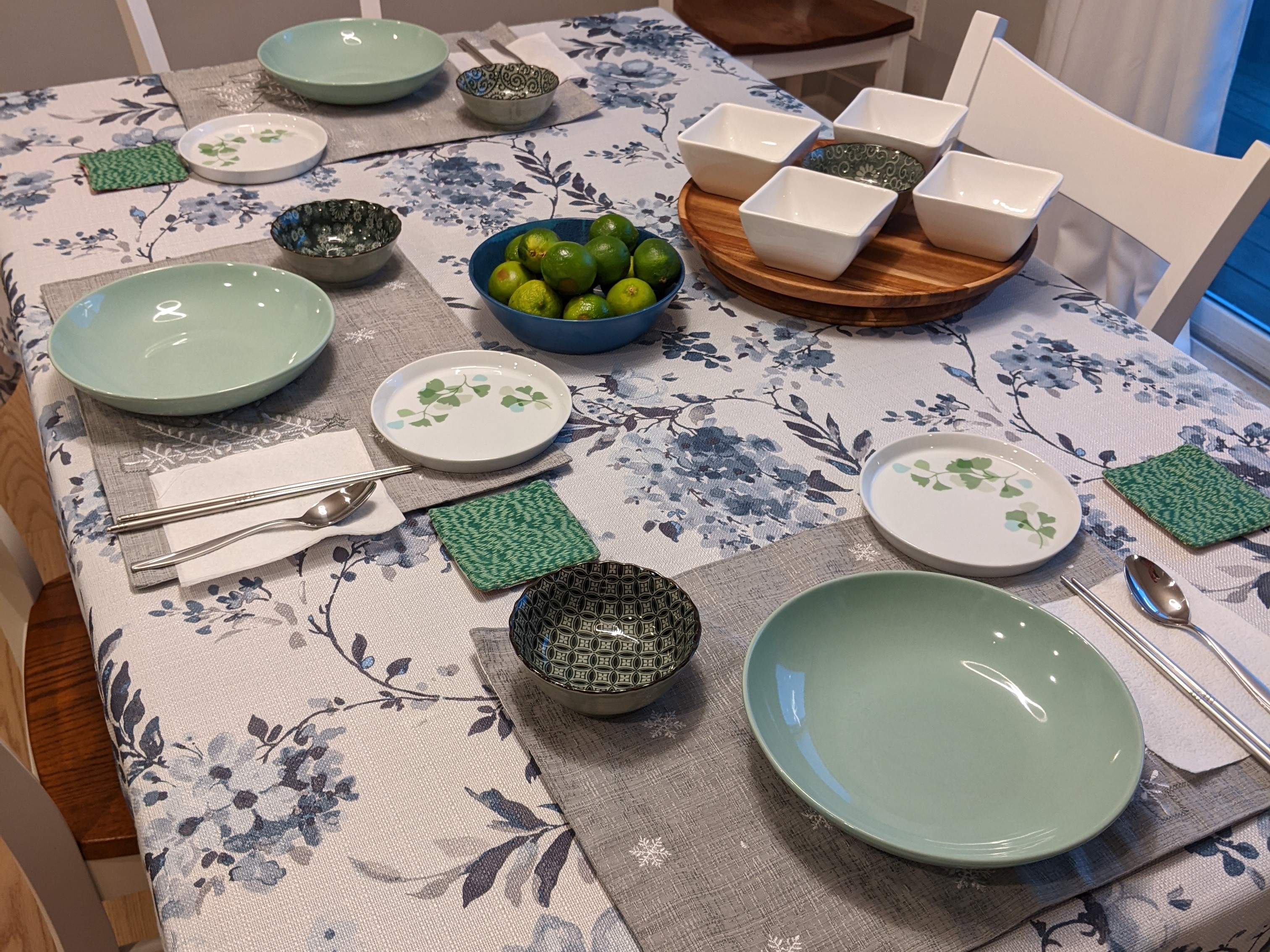
Now, many years later, I’m married and living in another new home. David and I have been through enough disappointments and losses to understand that our lives don’t have to be perfect to be enjoyable. We have combined our belongings haphazardly into our shared space and encouraged our respective dogs to get along with each other.
Still, sometimes I have the urge to replace the window curtains, build a gazebo in the backyard, reorganize the pantry, or paint the walls a new color. And I confess that sometimes I would like nothing better than to bowl David over with my culinary skills.
At those times, I remind myself that nothing has to be perfect.
I’ve noticed on social media that Martha Stewart is now offering a masterclass in “thinking like a boss and living like a legend.” She promises, “It’s never too late to build an empire.”
I’d like to believe that’s true.
In her masterclass, she teaches how to push yourself to see how much you can get done in a day. How to prefer hard work over sleep. How to turn adversity into opportunity. How to change. Because, she says, “When you’re done changing, you’re done.”
I loved Martha when I was a young homemaker. I still love her. I guess deep down I’d like to be Martha.
But I won’t be taking her masterclass.
Well . . . maybe?
No.


 Person on the Page
Leave a reply to Jeff Cann Cancel reply