
For me, late November always brings with it a host of memories, bad and good.
Recollections from my childhood of my mother’s volatility during the holiday season. Her seeming disdain for Thanksgiving and Christmas–perhaps because of their added demand on her as the manager and keeper of our house.
Memories of the holidays when my children were little. By that time I was responsible for making the season merry, and I poured my energy and whatever talents I had into doing just that.
Memories of the years following my divorce when I spent Thanksgivings alone and was joined by my grown daughter for quiet Christmases.
As the rush of memories assails me now, I realize that most of them involve food.
I remember my mother’s skills at pie-baking. My search for the best way to prepare a turkey. My daughter’s homebaked Christmas cookies, each one a work of art.
. . .
Now that I’m older, I find myself spending more and more time preparing food. I remarried two years ago, and my new husband and I bought a house that has the closest thing I’ll ever have to my dream kitchen.
White and bright with plenty of light from its large windows, it has adequate storage space for all the cooking equipment and dishes my husband and I brought from our previous homes.
A walk-in pantry allows me to enjoy the fact that we are well-stocked with everything we need and plenty more. White and whole wheat flour, rye, semolina, oats, and cornmeal. A variety of dried beans, pastas, rice, and nuts. Jarred jellies and salsas we buy at our nearby farmer’s market. I find pleasure in looking at and feeling grateful for all of the good food on reserve in our pantry.
When I was a young wife and mother preparing meals for four every day, I found cooking stressful. No one taught me how to cook. I learned along the way through trial and lots and lots of error.
Now, many years later, cooking is a comfort. It’s something familiar that I have carried with me through my adult life. Something that was daunting in the beginning, but that years of experimentation and practice have made familiar and enjoyable.
I love the sound my knife makes when it slices through a carrot. The aroma of lime as I squeeze it into a guacamole. The warmth of bread dough as I knead it–how it feels flesh-like and almost alive to my fingers.
I confess that I still have my share of cooking mishaps, but much of what I do now in the kitchen is familiar, and I have gained a level of competence I never dreamed I’d have when I was young.
. . .
A second marriage, especially later in life, is awkward and complicated. My husband and I brought our old ways and habits to the marriage. We came to this new commitment carrying the burdens of our past heartbreaks and disappointments. We each have grown children who are strangers to each other. Building a marriage out of all of that takes work and patience.
Shortly after we were married, I asked my husband how he and I could build a sense of family between us. I entered the relationship after a 30-year marriage followed by 10 years of living alone. He came as a widower, having two years earlier lost his wife.
Between us, we’ve done quite a bit of living and had quite a few ups and downs before we decided to make a life together. We’ve each had several careers, lived in a number of places, pursued dreams, and suffered losses – all before we met each other.
How could we nurture a bond between us, a sense of shared identity, the kind of closeness enjoyed by the long-married? Was it even possible?
My husband said that we might cultivate that feeling I was looking for by sharing meals. That sounded way too simplistic to me, but I gave it some thought.
He and I both enjoy cooking. Even before we were married, we enjoyed cooking together. But having been single and independent for a decade, I tended to eat on my own when I was hungry or had time. I didn’t have someone with whom I could share a meal and conversation. And as the primary caregiver for his wife before she died, he had cooked out of necessity, as an act of caring for someone who could no longer cook for herself.
He suggested that it would be good if we made it a point always to eat together.
I agreed, and we have been having dinner together every evening. Wouldn’t a habit of preparing meals together after work in the evening, sitting down to eat together, and sharing a good meal and conversation help us to feel closer, to feel that we belong together, that we are a family?
We have a long way to go, but I believe it has.
. . .
I have never cooked nor been served a full 12-course gourmet meal. A serious food lover, I can’t imagine having the discipline to pace myself through such a culinary exploit.
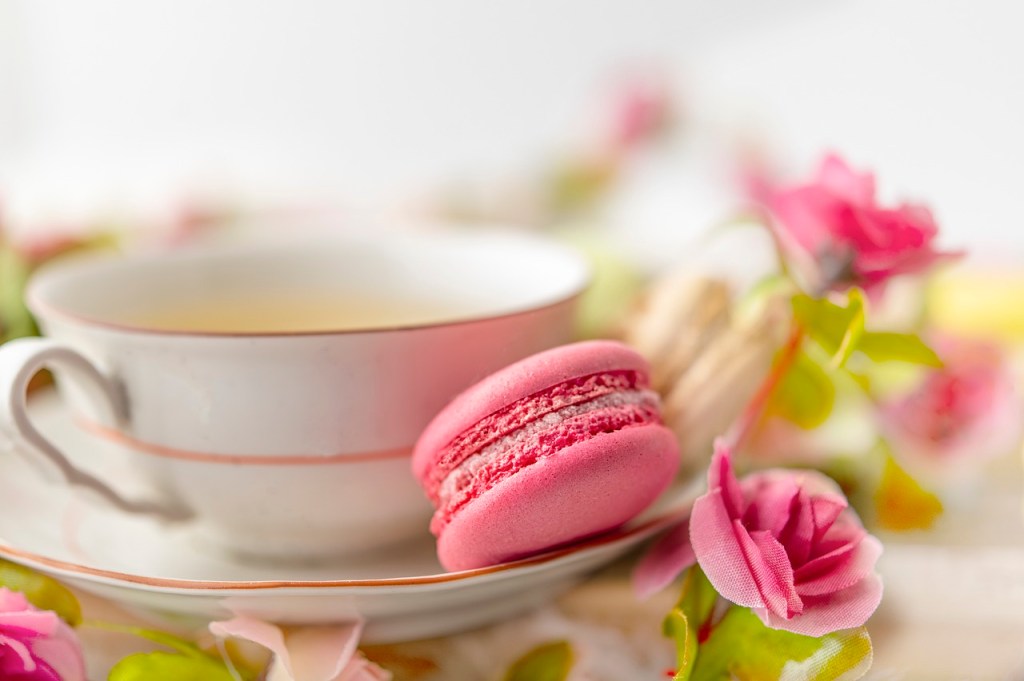
In these lavishly staged meals, the final course is called the mignardise. Meaning in French literally something precious, it is a small sweet treat, only a bite or two, given as a parting gesture at the end of the meal. Before the diner rises from the table, the mignardise is a last satisfying delight on the tongue.
If I imagine my life as a gourmet meal with many courses, I believe that this new home with its dream kitchen and, more importantly, the man with whom I share it are my mignardise.
Love later in life, arriving at last as a precious sweet treat. Filling my final days with delight.
Photo: Pixabay


 Person on the Page
Leave a reply to Georgia Kreiger Cancel reply